
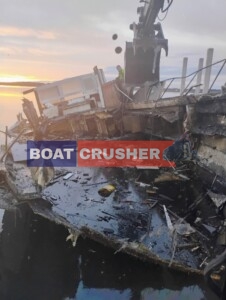
SC Boat Wrecking, Removal & Salvage
That boat sitting behind the house, tied to the dock, parked beside the garage, or taking up space at a Hilton Head marina is not going to disappear on its own.
Maybe it has not moved in years. Maybe the engine is dead, the hull is deteriorating, the trailer is shot, or a storm left the vessel in no condition to return to the water. Maybe you bought another boat and have no reason to keep the old one. Or maybe you inherited a vessel that came with more headaches than memories.
Whatever the story is, eventually somebody has to deal with it.
That is where Boat Crusher comes in.
Boat Crusher specializes in the part of boat ownership nobody wants to deal with: getting rid of the boat. We provide boat wrecking, boat removal, dismantling, hauling, and marine salvage services for unwanted vessels throughout Hilton Head, South Carolina, and surrounding Lowcountry communities.
We are not here to convince you to spend another year repairing a boat you no longer want. We are here to help you explore a practical way to get it removed.
If the vessel has reached the end of the road, Boat Crusher can help turn an oversized problem sitting on your property, at a marina, or along the waterfront into a removal project with a beginning and an end.
Is Your Boat Really Worth Saving?
Putting more money into an old boat, and ready to be done?
A bad engine can be replaced. A damaged interior can sometimes be rebuilt. Electronics can be upgraded. Fiberglass can be repaired. But what happens when the repair list keeps growing and the boat still is not something you actually want?
That is when the question changes.
Instead of asking, “How do I fix this boat?” you start asking, “How do I get this boat gone?”
Boat Crusher is built around that second question.
We work with owners who are finished with their vessels and need a practical solution for boat removal, wrecking, dismantling, hauling, and salvage. Rather than continuing to pay for storage, dockage, insurance, maintenance, batteries, engines, trailers, or repairs on a vessel you no longer use, start by finding out what your removal options are.
You may be surprised by how much easier the situation becomes once you stop treating the boat like a project that needs to be saved and start treating it like a vessel that needs to be removed.
Hilton Head Has Plenty of Boats — and Plenty That Eventually Need to Go
Boating is woven into everyday life around Hilton Head Island.
The surrounding waters include Broad Creek, Skull Creek, Calibogue Sound, the Intracoastal Waterway, tidal creeks, marshes, channels, and the waterways connecting the island to the broader Lowcountry boating community.
There are private docks, marina slips, boat storage facilities, waterfront homes, commercial properties, and boatyards throughout the region.
But every boat eventually reaches a different stage of ownership.
Some get sold.
Some get restored.
Some get passed down.
Some become valuable projects.
And some simply become too old, too damaged, too expensive, or too unwanted to justify keeping.
Those are the boats Boat Crusher wants to hear about.
An old center console sitting behind a house, a deteriorated sailboat at a dock, a storm-damaged cruiser at a marina, an unwanted pontoon on a trailer, or a neglected vessel taking up valuable storage space can all create the same basic problem: somebody needs to get it out.
Stop Looking at the Boat. Start Looking at the Solution.
There is a certain point where an unwanted boat becomes less of an asset and more of a piece of property you have to manage.
You see it every time you walk past it.
You think about it when a storage bill arrives.
You remember it when somebody asks whether you are ever going to use it again.
And every season that passes can make an already difficult removal more complicated.
Fiberglass deteriorates. Metal corrodes. Interiors absorb moisture. Engines seize. Batteries fail. Trailers deteriorate. Water collects. Equipment becomes harder to recover.
The boat does not become easier to deal with because it is ignored.
Instead of continuing to put it off, get the conversation started with Boat Crusher.
Provide information about the vessel, photographs when possible, its location, approximate size, and condition. From there, the removal requirements can be evaluated and an appropriate approach can be discussed.
Sometimes the hardest part of boat removal is simply making the first phone call.
Boat Wrecking Can Be the Answer When Restoration Is Not
Not every boat needs to leave the property in one piece.
Large vessels, heavily damaged boats, deteriorated fiberglass boats, and difficult-access vessels may require dismantling before they can be transported. That is where professional boat wrecking becomes an important part of the removal process.
Boat Crusher approaches these vessels from a practical perspective.
What can be removed?
What can potentially be salvaged?
What needs to be dismantled?
How can the remaining structure be handled?
The goal is not to preserve a boat that has already reached the end of its useful life.
The goal is to solve the problem.
Sometimes that means taking the vessel apart and getting every major component out of your way.
Boat wrecking can make it possible to deal with boats that would otherwise be extremely difficult to transport. Instead of trying to move a deteriorated vessel as though it were still a functioning boat, dismantling can become part of a larger removal strategy.
From Hilton Head Marina Slip to Final Haul-Away
Marina space is valuable.
An unwanted boat occupying a slip is not just an eyesore. It can prevent that space from being used for another vessel.
Boat owners may also find themselves dealing with marina requirements, storage deadlines, deteriorating boats, unpaid storage, damaged vessels, or boats that have simply been sitting untouched.
Boat Crusher can help owners explore removal solutions for vessels located at Hilton Head-area marinas and marine properties, subject to access, authorization, and site requirements.
The process begins with understanding the boat and where it is located.
A vessel floating in a marina slip presents different logistical considerations from a boat sitting on a trailer. A grounded vessel is different from a boat stored on land. A large cruiser behind a private dock is different from a small fishing boat sitting in a driveway.
There is no reason to pretend every boat removal is identical.
Boat Crusher looks at the actual situation and works toward a practical removal plan.
When the Boat Is Behind the House, Removal Gets Complicated
A waterfront home can be a fantastic place to own a boat.
It can also be a challenging place to remove one.
Private docks, narrow access points, landscaping, seawalls, tidal conditions, neighboring properties, and waterfront structures can all affect how a vessel is handled.
The biggest mistake a homeowner can make is assuming that removing a boat is as simple as calling someone with a trailer.
Sometimes it is.
Sometimes it is not.
Boat Crusher can help determine what information is needed to evaluate the job.
If the vessel is sitting behind your Hilton Head home and has become an unwanted permanent fixture, take photographs and provide as much information as possible about the boat and its location.
You may not know exactly how it will be removed.
That is okay.
You do not need to solve the logistics before making the call.
Storm-Damaged Boats Have a Different Story
A storm can change the entire equation.
A boat that was perfectly usable before a major weather event can become damaged, displaced, grounded, flooded, or structurally compromised afterward.
Hilton Head and the surrounding South Carolina coast are no strangers to severe coastal weather. After a storm, owners can be left with damaged hulls, destroyed interiors, disabled engines, damaged trailers, broken equipment, or vessels that are no longer worth restoring.
Once the immediate emergency has passed, the next question becomes what to do with the boat.
That is where removal and marine salvage become important.
Boat Crusher can help owners explore options for dealing with damaged vessels rather than allowing them to sit indefinitely while deterioration continues.
For some boats, salvage may make sense.
For others, dismantling and removal may be the practical answer.
The important thing is to address the vessel rather than allowing storm damage to become a long-term property problem.
Salvage Value Does Not Always Look Like a Beautiful Boat
An unwanted boat does not have to look impressive to contain salvageable components.
Engines, trailers, hardware, metals, marine equipment, fixtures, fittings, electronics, tanks, and other components may have value depending on their condition and marketability.
That is why Boat Crusher looks at the vessel as more than just a complete boat.
Marine salvage can involve recovering useful components and materials before the remaining structure is dismantled or disposed of through appropriate channels.
This is especially relevant when dealing with older boats that have no realistic resale market as complete vessels.
The boat may be finished as a boat without being finished as a source of components and materials.
Boat Crusher can help you understand whether salvage should be part of the removal conversation.
We Wreck Boats — We Do Not Pretend Every Boat Needs a Second Life
There is a major difference between helping someone sell a boat and helping someone get rid of one.
If you are still looking for a buyer, there are plenty of traditional ways to list a vessel.
But what if you have already tried?
What if nobody wants it?
What if the engine does not run?
What if the hull is deteriorated?
What if the boat needs more money than you are willing to spend?
What if it has been sitting for years?
What if you simply do not want it anymore?
That is where Boat Crusher separates itself from the typical boat sales conversation.
We understand that sometimes the most useful service is not another repair estimate or another listing.
Sometimes the answer is wrecking it, dismantling it, hauling it away, and moving on.
Boat Crusher Handles More Than One Kind of Boat
Hilton Head boat owners have plenty of different vessels to contend with.
That can include center consoles, fishing boats, skiffs, jon boats, pontoons, sailboats, cruisers, cabin boats, runabouts, yachts, and other recreational or commercial vessels.
Each one creates different removal considerations.
A pontoon may require a different approach from a sailboat. A large cabin cruiser may require substantially more preparation than a small skiff. A boat on a deteriorated trailer may create another set of challenges.
Boat Crusher starts with the actual vessel rather than assuming every removal job follows the same formula.
Tell us what you have.
Tell us where it is.
Tell us what condition it is in.
Then the removal requirements can be discussed.
The Lowcountry Is Full of Water — That Does Not Mean Your Old Boat Belongs There
An unwanted boat should not become a permanent fixture in a waterway, marsh, tidal creek, or shoreline environment simply because removal is inconvenient.
A deteriorating vessel can become a larger problem as time passes.
That is another reason to address unwanted boats before their condition gets worse.
Whether your vessel is associated with a dock near Broad Creek, a marina around Hilton Head, a waterfront property near Skull Creek, or another Lowcountry location, the first step is determining how the boat can be responsibly removed.
Boat Crusher focuses on solving the physical removal problem.
The sooner the project is addressed, the sooner you can stop worrying about the boat.
Boat Removal Should Not Become Another DIY Project
There are plenty of jobs homeowners can handle themselves.
Boat wrecking is not necessarily one of them.
Boats are heavy, awkward, and full of components that can make dismantling and transportation complicated. Trying to move a large or damaged vessel without appropriate equipment and planning can create additional property damage, personal injury risks, or expensive mistakes.
Hiring a company focused on boat removal allows you to step away from the physical burden.
Instead of wondering how you are going to cut, lift, transport, dismantle, or haul the vessel, start with a professional conversation about the project.
Boat Crusher can help determine what the job requires.
That alone can save you considerable time and frustration.
From “What Am I Going to Do With This?” to “It’s Gone.”
That is ultimately what boat owners want.
Not another complicated project.
Not another repair bill.
Not another season of paying to store something they do not use.
They want the boat gone.
Boat Crusher is focused on making that possible.
- Boat Crusher | New Bern, NC
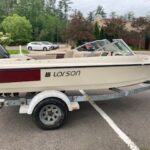 Boat Crusher offers boat removal and disposal solutions in New Bern, NC.
- Boat Crusher | Tacoma, WA
 Boat Crusher helps Tacoma, Washington, boat owners explore removal, hauling, scrapping, and disposal options for unwanted boats.
- Boat Crusher | Green, OH
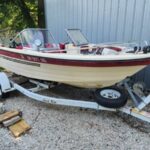 Clear out an unwanted boat in Green, Ohio, with removal and disposal options from Boat Crusher.
- Boat Crusher | Newport, ME
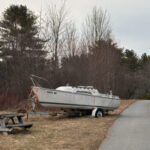 Boat Crusher helps Newport, Maine, property owners explore boat removal, hauling, scrapping, and disposal options for unwanted fishing boats, damaged vessels, and aging recreational watercraft.
- Boat Crusher | Annandale, VA
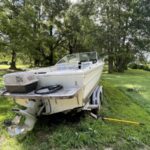 Boat Crusher helps Annandale, VA, boat owners explore removal options for unwanted fishing boats, aging fiberglass vessels, damaged pontoons, and neglected trailers throughout Northern Virginia.
- Boat Crusher | Wilmington, DE
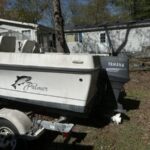 Boat Crusher helps Wilmington, DE, boat owners explore removal options for unwanted fishing boats, aging fiberglass vessels, damaged pontoons, and neglected trailers throughout northern Delaware.
Boat Crusher | FAQs
How do I start boat removal with Boat Crusher?
Getting started is simple. The fastest way to get on our boat removal calendar is to submit the job and boat details here.
Contact Boat Crusher and provide basic information about the boat, where it is located, its approximate size, its condition, and how it can be accessed. From there, we can discuss your boat removal needs and the next steps toward getting the vessel out of your way.
Can you remove a boat without a trailer?
100%, yes. A boat without a trailer may require different equipment and handling procedures.
Boat Crusher can evaluate the vessel and location to determine how it can be safely moved and transported.
Can Boat Crusher remove a boat and trailer together?
Yes, we remove both boats and trailers, boat and trailer removal may be handled as one project.
In some scenarios we remove together and in other scenarios we remove the trailer and boat seperately. Providing photographs and details about the boat and trailer can help determine the appropriate approach.
What types of boats does Boat Crusher remove?
Boat Crusher can handle many different types of unwanted vessels, including powerboats, sailboats..
trawlers, fishing boats, pontoons, center consoles, cabin cruisers, runabouts, commercial boats, and other recreational or marine vessels.
Does Boat Crusher remove boat’s from the water?
We remove any boat from the water. Price partially depends on the location, condition, size, and accessibility.
Water-based removal may require specialized marine equipment, lifting, towing, or recovery procedures.
Can Boat Crusher remove a boat that has been sitting for years?
Yes. Outdoor storage can leave a boat severely deteriorated or difficult to move, less difficult for Boat Crusher having experience.
Boat Crusher can evaluate an older vessel and determine what is needed to remove it from a property or facility.
What should I do before Boat Crusher arrives?
If possible, remove personal belongings and valuables from the vessel and make sure the removal team has clear access to the boat.
Keep ownership and other relevant documentation available if it is needed for the transaction or removal.
Can Boat Crusher remove a damaged boat?
Yes. Damaged boats are often excellent candidates for professional removal. We work with insurance agencies and adjusters as well.
Whether the vessel suffered storm damage, structural deterioration, collision damage, or years of neglect, Boat Crusher can evaluate the circumstances and determine the available removal options.
Do you remove boats after storms?
Boat Crusher can assist with vessels affected by severe weather, depending on the location and condition of the boat.
Storm-damaged boats may require specialized handling if they are overturned, grounded, partially submerged, or otherwise difficult to access.
What service does Boat Crusher provide?
Boat Crusher specializes in hauling, dismantling, removing, salvaging and disposing of unwanted vessels.
Boat crushing may involve breaking down fiberglass, aluminum, wood, engines, trailers, and other components for appropriate disposal or salvage. The process is useful when a boat is beyond repair, abandoned, severely damaged, or simply no longer wanted.
What if my boat is too large to tow?
Large vessels may require specialized transportation, escorts, or lifting equipment rather than conventional towing.
Boat Crusher can review the boat’s dimensions, location, accessibility, and condition to determine the appropriate removal method.
Does Boat Crusher remove boats from backyards?
Yes, 100%. Backyard boat removal can involve tight gates, landscaping, fences, narrow driveways, or other obstacles.
Boat Crusher can evaluate the property and determine how the vessel can be extracted and transported.
Can Boat Crusher help me get rid of a boat that I no longer want?
Yes. Boat Crusher helps boat owners get rid of a boat that is taking up space on land, sitting at a marina, sinking / sunken or becoming a storage problem.
Depending on the vessel’s condition and location, the boat may be removed for salvage, dismantling, scrapping, or disposal.
Does Boat Crusher accept credit & debit payments?
Yes. We accept many forms of payment.
We accept credit, debit cards at a 4% fee. To avoid the convenience fee customers can pay with check and zelle.
What is involved in boat salvage?
Boat salvage can include recovering a vessel, removing it from the water, securing it for transportation, dismantling usable components, and handling the remaining materials.
A marine salvage company may work with sailboats, powerboats, fishing boats, commercial vessels, and other unwanted or damaged watercraft.
Do we take all junk boats?
Yes. Our junk boat removal is intended for vessels that are no longer useful, have significant damage, or have reached the end of their service life.
Removal may require specialized equipment depending on whether the boat is located at a residence, marina, boatyard, shoreline, or other property.
How can I dispose of a boat that is too damaged to use?
If a boat is no longer practical to operate, professional Boat Disposal services can provide a solution.
The vessel can be evaluated for removal and then transported for dismantling, salvage, or appropriate disposal. This can be especially helpful for boats with extensive structural damage or deteriorated hulls.
Do you remove boats that are considered scrap boats?
Yes. A scrap boat may contain materials and components that can be separated during dismantling.
Depending on the vessel, this can include metal, aluminum, engines, hardware, trailers, and other components. A marine salvage service can determine the appropriate method for removing and processing the vessel.
What is a marine salvage company?
A marine salvage company specializes in recovering, removing, dismantling, and handling vessels and marine equipment.
Services can range from marine boat salvage and wreck removal to abandoned boat removal, sunken vessel recovery, and end-of-life boat disposal.
Can you remove an abandoned boat?
Boat Crusher frequently removes, disposes and wrecks abandoned boats it’s no more complicated than removing a privately owned vessel regardless of ownership.
Our boat salvage service will remove and dispose of the abandoned vessel from any property or location – driveway or waterway.
Do you handle sunken boat recovery?
Sunken boat recovery can involve specialized equipment and careful planning, and Boat Crusher can help.
The recovery process may include stabilizing the vessel, removing water or hazards, lifting or floating the boat, and transporting it to an appropriate location. Boat Crusher can evaluate the circumstances before determining the proper recovery approach.
Can you salvage a sailboat?
Yes. Sailboat salvage can involve removing the vessel from the water, recovering equipment and components, transporting the hull, and dismantling the boat when it is no longer serviceable.
The size, construction, location, and condition of the sailboat will determine how the salvage operation is handled.
Are there junkyards for boats?
While boat disposal facilities differ from traditional automotive junkyards, there are marine salvage yards and specialized facilities that handle unwanted vessels.
These locations may accept boats for dismantling, material recovery, component salvage, and final disposal.
What is a boat trash service?
A boat trash service is designed to help remove unwanted boats and the materials associated with them.
Depending on the project, this can include removing debris, damaged components, interior contents, equipment, and other material left behind after a boat has reached the end of its useful life.
Can you remove a boat from a property?
Yes. Our boat removal service can potentially remove vessels from residential properties, commercial locations, marinas, boatyards, storage facilities, and other sites.
Access, boat size, condition, and the availability of a trailer or lifting equipment can all affect the removal process.
What happens to my boat after it is removed?
After removal, the vessel can be evaluated for salvage and dismantling.
Some components may be separated for Salvage, or completely repurposed – while the remaining hull and other materials can be handled through appropriate disposal channels. The exact process depends on the boat’s location, construction, condition, and materials.
Can you dispose of a fiberglass boat?
Yes. Fiberglass boats can be difficult for property owners to dispose of because they are large and require specialized handling.
Professional junk boat disposal may involve cutting or dismantling the vessel into manageable sections before transporting the materials for appropriate processing or disposal.
Do you remove boats that are stuck or partially submerged?
100%. We recover and dispose of boats that are partially submerged, grounded, stranded, or otherwise inaccessible whether or not they may require specialized marine equipment.
We can assess the location and condition of the vessel and determine what type of recovery or removal operation is necessary.
Can you help with a boat that has been sitting unused for years?
Yes. An unused boat can deteriorate significantly over time, especially when exposed to weather and water.
Boat Crusher can evaluate an older vessel for removal, salvage, dismantling, or Boat Disposal, helping boat owners eliminate boats that have become unwanted or unusable.
Is junk boat disposal different from ordinary junk removal?
Yes. Boats are substantially larger and more complicated than ordinary household junk.
Junk boat disposal may require towing, lifting, cutting, dismantling, transportation, and specialized handling of marine materials. Using a boat removal service can make the process considerably more manageable.
Can you remove an old boat before it becomes an environmental problem?
Removing a deteriorating vessel before it leaks, sinks, or begins breaking apart can help prevent additional complications.
Boat Crusher will address any unwanted vessels before they become larger removal projects involving submerged debris, fuel, fluids, or other potentially hazardous materials.
Why should I use a Boat Crusher instead of trying to remove the boat myself?
Boat Crusher can involve heavy equipment, difficult access, towing, lifting, dismantling, and transportation.
Boat Crusher has experience handling these challenges and can determine the appropriate approach based on the vessel and its location. This can reduce the risk associated with attempting a complicated removal yourself.
Can Boat Crusher remove a boat from commercial property?
Yes. Boat Crusher can assist with boat removal from residential and commercial properties.
Access to the vessel, its size, condition, and whether it is already on a trailer can all affect how the removal is performed.
Do you remove boats that are not operational?
Yes. A boat does not have to be running or seaworthy to qualify for removal.
Boat Crusher handles vessels that are damaged, neglected, deteriorated, partially dismantled, or otherwise unable to operate under their own power.
Can Boat Crusher remove a boat from a marina?
Boat Crusher can work with boat owners and marina locations to arrange removal of unwanted vessels.
Marina access requirements, scheduling, documentation, and any facility-specific rules may need to be addressed before the boat is moved.
What information does Boat Crusher need for a boat removal quote?
Generally, useful information includes the boat’s approximate length, type, location, condition, whether it is on a trailer, and how easily the vessel can be accessed.
Photos are both helpful and required for helping Boat Crusher determine equipment needed for the removal and before scheduling.
How quickly can Boat Crusher remove my boat?
Removal timing depends on the vessel, location, access, equipment requirements, and scheduling availability.
Once Boat Crusher has the necessary details, we can discuss pricing, the next steps and determine an appropriate removal schedule – all of which can be handled under an hour or oat your pace.
Does Boat Crusher remove boats from a storage facility?
Yes. Boat Crusher can work with owners who have unwanted boats stored at storage facilities, boatyards, or other locations.
The facility’s access rules and authorization requirements will need to be coordinated before removal.