
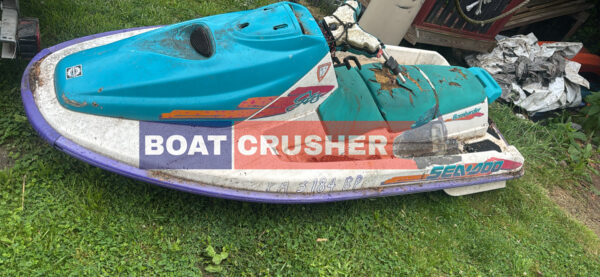
Philadelphia has a long connection to the Delaware River, the Schuylkill River, and the boating communities throughout southeastern Pennsylvania. From recreational fishing boats and aluminum watercraft to sailboats, pontoons, and larger powerboats, vessels across the region eventually reach a point when repairs, storage, or continued ownership no longer make sense.
When an unwanted boat becomes a burden, finding a practical way to remove it can be difficult. Some vessels are sitting on trailers in residential driveways, while others are stored at marinas, commercial properties, or private waterfront locations. Damaged hulls, deteriorating interiors, and non-operational engines can make the process even more complicated.
Boat Crusher helps Philadelphia-area boat owners, property managers, and businesses explore options for boat removal, hauling, scrapping, dismantling, and disposal. Whether you need to clear an old fishing boat from your property or investigate disposal options for a larger fiberglass vessel, we can help evaluate the project and identify potential next steps.
The right approach depends on the boat’s construction, dimensions, condition, accessibility, and destination. From straightforward trailer hauling to specialized marine recovery, each project deserves an appropriate plan.
Philadelphia Boat Removal for Unwanted Recreational Watercraft
An unused boat can occupy valuable space for years. What begins as a temporary storage situation can become a long-term problem when the vessel deteriorates, the trailer becomes unusable, or repairs exceed the boat’s practical value.
Boat removal in Philadelphia can involve residential properties, commercial lots, outdoor storage facilities, marinas, and locations throughout the surrounding counties.
Boat Crusher welcomes inquiries involving:
- Aluminum fishing boats and jon boats
- Fiberglass bass boats and runabouts
- Pontoon boats and recreational barges
- Sailboats and small cruising vessels
- Ski boats and recreational powerboats
- Cabin cruisers and larger watercraft
- Damaged or abandoned boats
- Boats with deteriorated hulls or transoms
- Non-operational vessels and unwanted trailers
Not every boat requires the same removal method. A small fishing boat on a suitable trailer may be relatively straightforward to transport, while a larger vessel without a trailer could require loading equipment or additional preparation.
Providing the approximate length, construction material, condition, and current location helps establish what kind of work may be involved.
Delaware River Boat Removal and Waterfront Hauling
The Delaware River is one of the defining waterways of the Philadelphia region. Its shoreline includes commercial, recreational, and industrial areas where boats may be stored, maintained, launched, or removed.
A vessel located near the river can present unique logistical requirements. Waterfront access, shoreline conditions, private property permissions, and available lifting equipment all need to be considered.
Boat removal from a waterfront location is not always a standard hauling project. A boat sitting on land may be suitable for transportation by trailer, while one that remains afloat may require a qualified marine operator to coordinate towing, recovery, or haul-out services.
Boat Crusher helps customers explore potential arrangements for unwanted vessels associated with the Delaware River corridor and surrounding communities.
Projects may involve:
- Boats stored on private waterfront property
- Damaged recreational vessels
- Older fishing boats and cruisers
- Abandoned watercraft requiring evaluation
- Boats being cleared from storage locations
- Vessels requiring marine towing or recovery coordination
Any project involving public waterfront facilities, marinas, or managed property should account for the applicable access rules and permissions before removal begins.
Fiberglass Boat Scrapping and Hull Disposal in Philadelphia
Fiberglass boats are common throughout Pennsylvania’s recreational boating market, but disposing of an older fiberglass vessel can be more complicated than getting rid of an ordinary metal boat.
A fiberglass hull may contain reinforced plastic, foam flotation, wood components, wiring, upholstery, mechanical equipment, and metal hardware. These materials can require different handling methods during dismantling and disposal.
When a vessel is no longer economical to repair, Boat Crusher helps owners investigate possible fiberglass boat removal and scrapping arrangements.
Potential projects include:
- Removing deteriorated fiberglass hulls
- Dismantling damaged recreational boats
- Separating reusable engines and components
- Removing old interiors and equipment
- Preparing vessels for transportation
- Evaluating salvageable materials
- Coordinating appropriate disposal options
The condition and construction of the vessel influence which options are practical. Some boats may have reusable components, while others require more extensive dismantling before transportation or disposal.
Fuel, batteries, oils, and other potentially hazardous materials should be identified and handled separately according to applicable requirements before crushing or dismantling begins.
Boat Disposal Near the Schuylkill River and Philadelphia’s Recreational Areas
The Schuylkill River provides another important boating connection within Philadelphia. Along with nearby waterways and regional recreation areas, it contributes to the area’s demand for boat maintenance, transportation, storage, and eventual disposal.
An unwanted vessel may be located at a private property near the river, a storage facility, or a recreational boating location. Its exact position can influence whether ordinary hauling is sufficient or whether additional equipment is necessary.
Boat Crusher helps evaluate removal inquiries involving vessels throughout the Philadelphia area, including boats associated with the Delaware and Schuylkill River corridors.
Regional projects may also come from communities near the city’s waterways and surrounding counties. These can include vessels that need to be transported from residential properties, storage yards, or other authorized locations.
When a boat remains in the water, customers may need to coordinate with qualified operators for marine towing, lifting, or haul-out services. Water-based removal should be planned carefully to avoid unnecessary damage to the vessel, shoreline, or surrounding environment.
Aluminum Fishing Boat Recycling and Pontoon Removal
Not every unwanted vessel needs to be treated as a complete disposal project. Depending on its construction and condition, certain boats may contain materials or components that have salvage or recycling potential.
Aluminum fishing boats are particularly common among recreational boaters. Their lighter construction can make them easier to transport than larger fiberglass vessels, and the aluminum may have recycling value depending on its condition and the receiving facility.
Pontoons require a different evaluation. Their structure can include aluminum flotation sections, decking, railings, seats, electrical systems, motors, and other materials that may need to be separated.
Boat Crusher helps customers explore possible options for:
- Aluminum fishing boat removal
- Pontoon boat hauling and dismantling
- Aluminum hull salvage
- Steel boat disposal
- Boat motor and component removal
- Damaged watercraft transportation
- Unwanted marine equipment removal
- Recreational boat scrapping
Recyclable metal does not automatically guarantee payment or free removal. Labor, transportation, processing costs, and the condition of the vessel all influence whether a salvage opportunity is practical.
Photographs of the hull, interior, engine, and trailer can help clarify what materials and equipment are involved.
Boat Hauling Throughout Philadelphia and Southeastern Pennsylvania
Moving a boat from a property can be one of the most challenging parts of the removal process. Even when the vessel no longer runs, its dimensions, weight, and accessibility can make transportation complicated.
Boat hauling in Philadelphia may involve residential driveways, commercial properties, storage yards, marinas, and private waterfront locations. The transportation plan needs to account for the vessel’s size, trailer condition, route, and final destination.
Potential project locations include:
- Philadelphia
- Bucks County
- Montgomery County
- Delaware County
- Chester County
- Northeast Philadelphia
- South Philadelphia
- Bensalem
- Bristol
- Norristown
- King of Prussia
- Conshohocken
- Media
- Upper Darby
- Levittown
A boat already positioned on a suitable trailer may require less preparation. If the trailer is damaged, missing, or unsuitable for the vessel, alternative loading and hauling arrangements may be necessary.
Larger boats may involve oversized transportation requirements, route restrictions, permits, or specialized equipment. Narrow streets, low bridges, overhead obstructions, and limited turning space can also affect the project.
Before scheduling, it is helpful to identify the boat’s approximate dimensions and confirm that the pickup location can accommodate the equipment needed.
Removing Abandoned Boats From Residential and Commercial Properties
Unwanted boats can create problems for homeowners, landlords, storage operators, and businesses. A deteriorating vessel may occupy parking space, interfere with property improvements, or prevent a storage area from being used for other purposes.
Boat Crusher welcomes inquiries involving property cleanup and unwanted watercraft removal, including:
- Residential driveways and backyards
- Commercial storage properties
- Outdoor equipment yards
- Marina and boat storage locations
- Estate and inherited property cleanouts
- Contractor site preparation
- Business equipment removal
- Multiple-vessel cleanup projects
Some boats are left behind after a property changes ownership. Others remain unused because the owner no longer has the resources or interest to maintain them.
For property managers and commercial operators, multiple-vessel projects may require a coordinated schedule. Preparing an inventory with photographs, approximate dimensions, and individual locations can help establish the amount of work involved.
If a boat belongs to a former tenant, previous owner, or another individual, the appropriate legal authority should be established before removal is authorized. Confirming ownership and permissions helps prevent avoidable disputes.
Boat Removal Near New Jersey and the Greater Delaware Valley
Philadelphia’s location along the Delaware River makes it part of a broader boating and transportation region that extends into neighboring New Jersey and Delaware.
Boat owners may keep vessels across state lines while living or working in the Philadelphia metropolitan area. Storage facilities, residential properties, and waterfront locations throughout the Delaware Valley can all generate removal inquiries.
Nearby communities such as Camden, Gloucester City, and other areas across the river may have their own access requirements and transportation considerations.
Cross-state projects may involve additional coordination, depending on the pickup location, destination, and applicable transportation requirements. A boat’s location should always be confirmed before an estimate or schedule is established.
Whether the vessel is located in Philadelphia proper or elsewhere in the surrounding region, the goal is to identify a workable removal arrangement based on its actual condition and accessibility.
What Determines the Cost of Boat Removal in Philadelphia?
There is no universal price for removing every boat. A small aluminum fishing boat on a usable trailer presents a very different project from a large fiberglass cruiser requiring specialized loading and transportation.
Several factors influence the work and potential cost.
Boat dimensions and weight: Larger vessels generally require more substantial hauling equipment and transportation capacity.
Construction material: Fiberglass, aluminum, steel, and wood can involve different handling and disposal requirements.
Vessel condition: Hull damage, water intrusion, deteriorated interiors, and missing components can make loading more difficult.
Pickup accessibility: Narrow driveways, steep access areas, low overhead clearance, and limited working space can affect equipment selection.
Trailer condition: A suitable trailer can simplify transportation, while a damaged or missing trailer may require additional arrangements.
Distance: The location of the boat and its intended destination influence hauling requirements.
Processing needs: Dismantling, crushing, material separation, and final disposal may involve additional labor.
Marine recovery: A boat still in the water may require separate towing, lifting, or haul-out coordination.
Providing accurate information about the vessel is the best way to begin evaluating a removal project. Photographs and basic dimensions can help clarify the equipment and arrangements that may be needed.
Responsible Boat Disposal and Environmental Planning
Boat disposal should account for more than simply moving a hull off a property. Older watercraft can contain gasoline, diesel, engine oil, batteries, coolants, electrical equipment, and other materials that need appropriate handling.
Before dismantling or crushing begins, potentially hazardous materials should be identified and managed according to applicable requirements. Boats located near the Delaware or Schuylkill River should be handled carefully to prevent debris and contaminants from entering waterways.
Where practical, reusable components and recyclable materials may be evaluated for recovery. Remaining waste should be directed toward appropriate disposal channels.
Waterfront removal projects may also require coordination with property owners, marina operators, facility managers, or relevant public agencies. Confirming access and permissions before work begins can help prevent unnecessary delays.
Responsible planning helps protect the surrounding property while providing a more organized approach to unwanted boat removal.
Contact Boat Crusher for Philadelphia Boat Removal
If an unwanted boat is taking up space, creating a storage problem, or becoming too expensive to maintain, Boat Crusher can help you explore removal and disposal options in Philadelphia and surrounding communities.
We welcome inquiries involving aluminum fishing boats, fiberglass hulls, pontoons, sailboats, cabin cruisers, damaged recreational vessels, abandoned watercraft, and unwanted marine equipment. Projects may involve boat hauling, scrapping, dismantling, crushing, or coordination for specialized removal work.
To get started, provide the vessel’s pickup location, approximate length, construction material, and current condition. Include photographs of the hull, interior, engine, and trailer if available. Let us know whether the boat is stored on land or remains in the water.
With those details, potential removal arrangements can be evaluated and the next steps discussed. Contact Boat Crusher today to begin your Philadelphia, Pennsylvania boat removal inquiry.
Things Philadelphia Boat Owners Want to Know
Is there a size limit?
No, there isn’t. Every size and every type of boat is welcome. That covers trawlers, tugs, and powerboats, plus every other kind of boat. Whether it’s a small boat on a trailer in Philadelphia or a large vessel near the Delaware River, we can take it.
Do you need photos of my boat?
We sure do. We’ll also need photos before we can schedule, so we arrive with the right equipment. Call 800-590-9280 or send us your boat’s details through the form.
Do you only crush boats?
No. Our Philadelphia services are recovery, towing, haul-out, wrecking, crushing, and disposal. You can have the boat crushed where it sits or towed away to be crushed off site.
Why isn’t there a set price on the website?
Each boat is handled in its own way, which is why we quote every job individually. Talk to us at 800-590-9280, or use the online form, and we’ll put together a quote.
How long will I wait for a pickup in Philadelphia?
If the weather is good, most boats are picked up the next day. For boats longer than 30 feet, allow up to 7 days. Reach out at 800-590-9280 when you’re ready.
- Boat Crusher | Fort Wayne, IN
 Boat Crusher helps Fort Wayne, Indiana, boat owners explore removal, hauling, and disposal options for unwanted vessels throughout northeastern Indiana.
- Boat Crusher | Pueblo, CO
 Boat Crusher helps Pueblo, Colorado, boat owners explore removal, hauling, and disposal options for unwanted vessels throughout southern Colorado.
- Boat Crusher | Coeur d’Alene, ID
 Boat Crusher helps Coeur d’Alene, Idaho, boat owners explore removal, hauling, and disposal options for unwanted vessels throughout North Idaho.
- Boat Crusher | Huntington, WV
 Boat Crusher helps Huntington, West Virginia, boat owners explore removal, hauling, and disposal options for unwanted vessels throughout the Tri-State region.
- Boat Crusher | St. George, UT
 Boat Crusher helps St. George, Utah, owners explore boat removal, hauling, and disposal options for unwanted watercraft throughout southern Utah.
- Boat Crusher | Cheyenne, WY
 Boat Crusher helps Cheyenne, Wyoming, boat owners explore hauling, removal, and disposal options for unwanted watercraft throughout southeastern Wyoming.
Boat Crusher | FAQs
How do I start boat removal with Boat Crusher?
Getting started is simple. The fastest way to get on our boat removal calendar is to submit the job and boat details here.
Contact Boat Crusher and provide basic information about the boat, where it is located, its approximate size, its condition, and how it can be accessed. From there, we can discuss your boat removal needs and the next steps toward getting the vessel out of your way.
Can you remove a boat without a trailer?
100%, yes. A boat without a trailer may require different equipment and handling procedures.
Boat Crusher can evaluate the vessel and location to determine how it can be safely moved and transported.
Can Boat Crusher remove a boat and trailer together?
Yes, we remove both boats and trailers, boat and trailer removal may be handled as one project.
In some scenarios we remove together and in other scenarios we remove the trailer and boat seperately. Providing photographs and details about the boat and trailer can help determine the appropriate approach.
What types of boats does Boat Crusher remove?
Boat Crusher can handle many different types of unwanted vessels, including powerboats, sailboats..
trawlers, fishing boats, pontoons, center consoles, cabin cruisers, runabouts, commercial boats, and other recreational or marine vessels.
Does Boat Crusher remove boat’s from the water?
We remove any boat from the water. Price partially depends on the location, condition, size, and accessibility.
Water-based removal may require specialized marine equipment, lifting, towing, or recovery procedures.
Can Boat Crusher remove a boat that has been sitting for years?
Yes. Outdoor storage can leave a boat severely deteriorated or difficult to move, less difficult for Boat Crusher having experience.
Boat Crusher can evaluate an older vessel and determine what is needed to remove it from a property or facility.
What should I do before Boat Crusher arrives?
If possible, remove personal belongings and valuables from the vessel and make sure the removal team has clear access to the boat.
Keep ownership and other relevant documentation available if it is needed for the transaction or removal.
Can Boat Crusher remove a damaged boat?
Yes. Damaged boats are often excellent candidates for professional removal. We work with insurance agencies and adjusters as well.
Whether the vessel suffered storm damage, structural deterioration, collision damage, or years of neglect, Boat Crusher can evaluate the circumstances and determine the available removal options.
Do you remove boats after storms?
Boat Crusher can assist with vessels affected by severe weather, depending on the location and condition of the boat.
Storm-damaged boats may require specialized handling if they are overturned, grounded, partially submerged, or otherwise difficult to access.
What service does Boat Crusher provide?
Boat Crusher specializes in hauling, dismantling, removing, salvaging and disposing of unwanted vessels.
Boat crushing may involve breaking down fiberglass, aluminum, wood, engines, trailers, and other components for appropriate disposal or salvage. The process is useful when a boat is beyond repair, abandoned, severely damaged, or simply no longer wanted.
What if my boat is too large to tow?
Large vessels may require specialized transportation, escorts, or lifting equipment rather than conventional towing.
Boat Crusher can review the boat’s dimensions, location, accessibility, and condition to determine the appropriate removal method.
Does Boat Crusher remove boats from backyards?
Yes, 100%. Backyard boat removal can involve tight gates, landscaping, fences, narrow driveways, or other obstacles.
Boat Crusher can evaluate the property and determine how the vessel can be extracted and transported.
Can Boat Crusher help me get rid of a boat that I no longer want?
Yes. Boat Crusher helps boat owners get rid of a boat that is taking up space on land, sitting at a marina, sinking / sunken or becoming a storage problem.
Depending on the vessel’s condition and location, the boat may be removed for salvage, dismantling, scrapping, or disposal.
Does Boat Crusher accept credit & debit payments?
Yes. We accept many forms of payment.
We accept credit, debit cards at a 4% fee. To avoid the convenience fee customers can pay with check and zelle.
What is involved in boat salvage?
Boat salvage can include recovering a vessel, removing it from the water, securing it for transportation, dismantling usable components, and handling the remaining materials.
A marine salvage company may work with sailboats, powerboats, fishing boats, commercial vessels, and other unwanted or damaged watercraft.
Do we take all junk boats?
Yes. Our junk boat removal is intended for vessels that are no longer useful, have significant damage, or have reached the end of their service life.
Removal may require specialized equipment depending on whether the boat is located at a residence, marina, boatyard, shoreline, or other property.
How can I dispose of a boat that is too damaged to use?
If a boat is no longer practical to operate, professional Boat Disposal services can provide a solution.
The vessel can be evaluated for removal and then transported for dismantling, salvage, or appropriate disposal. This can be especially helpful for boats with extensive structural damage or deteriorated hulls.
Do you remove boats that are considered scrap boats?
Yes. A scrap boat may contain materials and components that can be separated during dismantling.
Depending on the vessel, this can include metal, aluminum, engines, hardware, trailers, and other components. A marine salvage service can determine the appropriate method for removing and processing the vessel.
What is a marine salvage company?
A marine salvage company specializes in recovering, removing, dismantling, and handling vessels and marine equipment.
Services can range from marine boat salvage and wreck removal to abandoned boat removal, sunken vessel recovery, and end-of-life boat disposal.
Can you remove an abandoned boat?
Boat Crusher frequently removes, disposes and wrecks abandoned boats it’s no more complicated than removing a privately owned vessel regardless of ownership.
Our boat salvage service will remove and dispose of the abandoned vessel from any property or location – driveway or waterway.
Do you handle sunken boat recovery?
Sunken boat recovery can involve specialized equipment and careful planning, and Boat Crusher can help.
The recovery process may include stabilizing the vessel, removing water or hazards, lifting or floating the boat, and transporting it to an appropriate location. Boat Crusher can evaluate the circumstances before determining the proper recovery approach.
Can you salvage a sailboat?
Yes. Sailboat salvage can involve removing the vessel from the water, recovering equipment and components, transporting the hull, and dismantling the boat when it is no longer serviceable.
The size, construction, location, and condition of the sailboat will determine how the salvage operation is handled.
Are there junkyards for boats?
While boat disposal facilities differ from traditional automotive junkyards, there are marine salvage yards and specialized facilities that handle unwanted vessels.
These locations may accept boats for dismantling, material recovery, component salvage, and final disposal.
What is a boat trash service?
A boat trash service is designed to help remove unwanted boats and the materials associated with them.
Depending on the project, this can include removing debris, damaged components, interior contents, equipment, and other material left behind after a boat has reached the end of its useful life.
Can you remove a boat from a property?
Yes. Our boat removal service can potentially remove vessels from residential properties, commercial locations, marinas, boatyards, storage facilities, and other sites.
Access, boat size, condition, and the availability of a trailer or lifting equipment can all affect the removal process.
What happens to my boat after it is removed?
After removal, the vessel can be evaluated for salvage and dismantling.
Some components may be separated for Salvage, or completely repurposed – while the remaining hull and other materials can be handled through appropriate disposal channels. The exact process depends on the boat’s location, construction, condition, and materials.
Can you dispose of a fiberglass boat?
Yes. Fiberglass boats can be difficult for property owners to dispose of because they are large and require specialized handling.
Professional junk boat disposal may involve cutting or dismantling the vessel into manageable sections before transporting the materials for appropriate processing or disposal.
Do you remove boats that are stuck or partially submerged?
100%. We recover and dispose of boats that are partially submerged, grounded, stranded, or otherwise inaccessible whether or not they may require specialized marine equipment.
We can assess the location and condition of the vessel and determine what type of recovery or removal operation is necessary.
Can you help with a boat that has been sitting unused for years?
Yes. An unused boat can deteriorate significantly over time, especially when exposed to weather and water.
Boat Crusher can evaluate an older vessel for removal, salvage, dismantling, or Boat Disposal, helping boat owners eliminate boats that have become unwanted or unusable.
Is junk boat disposal different from ordinary junk removal?
Yes. Boats are substantially larger and more complicated than ordinary household junk.
Junk boat disposal may require towing, lifting, cutting, dismantling, transportation, and specialized handling of marine materials. Using a boat removal service can make the process considerably more manageable.
Can you remove an old boat before it becomes an environmental problem?
Removing a deteriorating vessel before it leaks, sinks, or begins breaking apart can help prevent additional complications.
Boat Crusher will address any unwanted vessels before they become larger removal projects involving submerged debris, fuel, fluids, or other potentially hazardous materials.
Why should I use a Boat Crusher instead of trying to remove the boat myself?
Boat Crusher can involve heavy equipment, difficult access, towing, lifting, dismantling, and transportation.
Boat Crusher has experience handling these challenges and can determine the appropriate approach based on the vessel and its location. This can reduce the risk associated with attempting a complicated removal yourself.
Can Boat Crusher remove a boat from commercial property?
Yes. Boat Crusher can assist with boat removal from residential and commercial properties.
Access to the vessel, its size, condition, and whether it is already on a trailer can all affect how the removal is performed.
Do you remove boats that are not operational?
Yes. A boat does not have to be running or seaworthy to qualify for removal.
Boat Crusher handles vessels that are damaged, neglected, deteriorated, partially dismantled, or otherwise unable to operate under their own power.
Can Boat Crusher remove a boat from a marina?
Boat Crusher can work with boat owners and marina locations to arrange removal of unwanted vessels.
Marina access requirements, scheduling, documentation, and any facility-specific rules may need to be addressed before the boat is moved.
What information does Boat Crusher need for a boat removal quote?
Generally, useful information includes the boat’s approximate length, type, location, condition, whether it is on a trailer, and how easily the vessel can be accessed.
Photos are both helpful and required for helping Boat Crusher determine equipment needed for the removal and before scheduling.
How quickly can Boat Crusher remove my boat?
Removal timing depends on the vessel, location, access, equipment requirements, and scheduling availability.
Once Boat Crusher has the necessary details, we can discuss pricing, the next steps and determine an appropriate removal schedule – all of which can be handled under an hour or at your pace.
Does Boat Crusher remove boats from a storage facility?
Yes. Boat Crusher can work with owners who have unwanted boats stored at storage facilities, boatyards, or other locations.
The facility’s access rules and authorization requirements will need to be coordinated before removal.